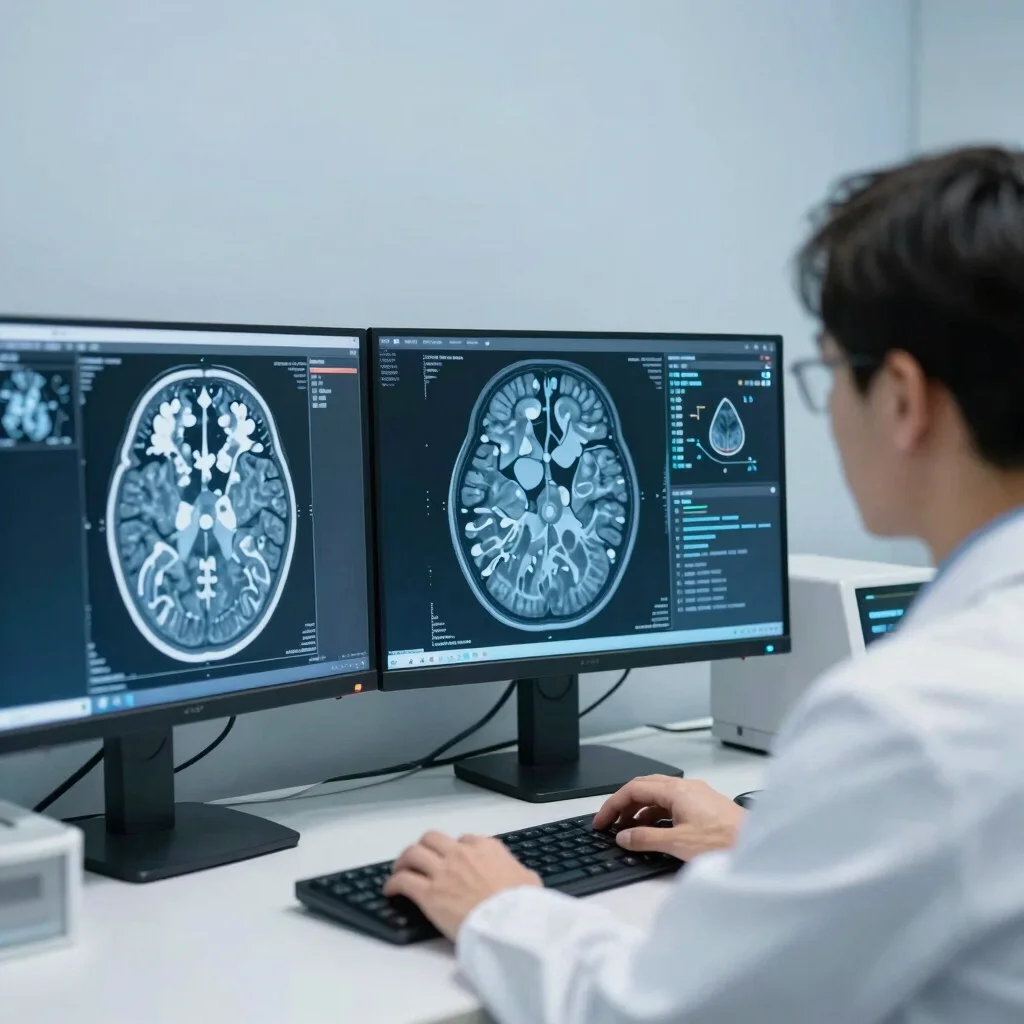
High-volume medical centers are adopting artificial intelligence to assist in imaging interpretation and early risk detection. However, adding AI models to busy clinical environments requires careful integration so doctors receive timely insights without suffering alert fatigue.
Reducing Diagnostic Friction for Radiologists and Pathologists
When diagnostic tools operate independently from primary hospital information systems, physicians lose valuable time toggling between software platforms. Embedding machine learning algorithms directly into existing PACS interfaces allows clinicians to review AI-generated heatmaps alongside raw imaging files in real time.
Maintaining Clinical Validation and Algorithmic Precision
Healthcare executives must establish rigid validation benchmarks before rolling out predictive diagnostic models to active care units. Continuous auditing ensures that algorithmic predictions remain accurate across diverse patient demographics while remaining compliant with clinical governance standards.
Scaling Intelligence Across Enterprise Care Systems
Scaling AI diagnostic tools enterprise-wide demands a resilient cloud-hybrid architecture capable of handling intensive computing loads. Hospital IT directors can optimize compute expenditure and maintain low latency by distributing diagnostic inference workloads across dedicated edge servers.